
Looking to make your bedroom feel more spacious without knocking down any walls? If you’re tackling some interior house painting and want to transform a cramped room into a cozy retreat, you’re in the right place. This guide is packed with smart, creative painting ideas for small bedrooms that will make your space feel lighter, brighter, and bigger.
Key Takeaways:
- Use light, cool tones to create an airy feel.
- Paint ceilings and trim the right way to open up the room.
- Accent walls and strategic color blocking can add depth.
- Gloss and finish matter more than you think.
- Color consistency and flow help unify small spaces.

Tiny Room, Big Impact: What Paint Colors Can Do
The color you choose for your walls isn’t just about style—it’s about space. Small bedrooms can easily feel tight or cluttered, and the wrong paint choice can make it worse. Choosing the right painting ideas for small bedrooms can visually expand the room, improve lighting, and create a sense of calm.
Best Light Colors That Make a Bedroom Look Bigger
Light colors reflect more light, making your room appear more open. Here are some of the top choices:
- Soft white: Timeless and reflective, soft white bounces light around the room, making it feel open and airy without appearing sterile.
- Pale gray: Adds sophistication without closing in. It offers a modern, elegant touch while still keeping the space feeling light and uncluttered.
- Pastel blue or green: Brings a calming, open feel. These hues are often associated with nature and tranquility, which helps a small space feel more relaxed and expansive.
- Blush pink or beige: Adds warmth without heaviness. These subtle tones infuse the room with a cozy, inviting atmosphere without making it feel smaller.
Stick with matte or eggshell finishes for a soft, spacious effect. These finishes diffuse light gently, reducing glare and making the walls recede visually, which helps the room feel more expansive and serene.
Tricks With Trim and Ceilings
Paint your ceiling the same color as the walls or just a shade lighter. This reduces contrast and makes the ceiling feel higher, creating a seamless vertical flow that helps visually stretch the room. For baseboards and trim, go with a slightly glossier version of your wall color—it keeps the eye moving smoothly, adds subtle dimension, and makes the room feel more continuous and cohesive.
Accent Walls and Color Blocking
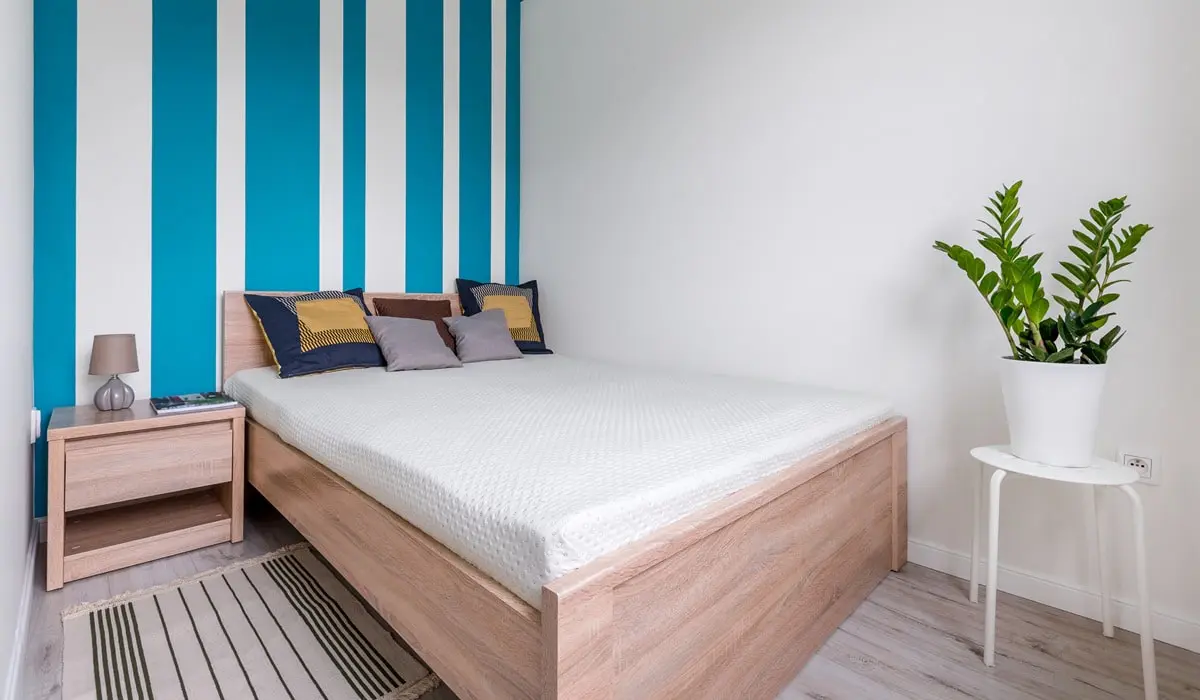
Don’t be afraid to add personality. A well-placed accent wall can add depth and character to a small room without overwhelming it. Try a darker color on the wall behind your bed to anchor the space and create a focal point, while keeping the other walls light to maintain openness.
This contrast draws the eye and adds visual interest without shrinking the room. Another trick is horizontal color blocking: use a two-tone wall with a lighter color on top to lift the eye and make the walls appear taller. This technique adds dimension and breaks up monotony while still keeping the space feeling airy.
Gloss, Sheen, and Finish Tips
Gloss level affects how light bounces off your walls, and choosing the right finish can dramatically influence the perception of space. While high-gloss finishes reflect more light and can make rooms feel brighter, they also tend to accentuate any surface flaws. In small bedrooms, where wall imperfections might be more noticeable, a satin or eggshell finish usually strikes the right balance.
These finishes offer enough light reflection to open up the space while still masking minor blemishes—making them ideal choices, especially if you’re doing interior house painting on your own.
Flow Matters: Connect Rooms With Color
If your bedroom connects to other areas, use similar shades to maintain visual flow. Carrying the same or complementary colors from one room to the next helps prevent a choppy, disconnected feeling and instead creates a seamless transition that tricks the eye into perceiving a larger space. This cohesion can make your entire home feel bigger, not just the bedroom.
Paint isn’t just a color choice—it’s a design tool that can subtly guide the way people experience your space.
What Not to Do
Choosing the right paint approach is just as important as picking the right color. Here are some common mistakes to avoid if you want your small bedroom to feel more spacious and inviting:
- Avoid dark colors on all walls: Dark hues can make a small room feel even smaller and more enclosed. Use them sparingly as accents if you love the drama.
- Don’t mix too many bold colors: A jumble of vibrant shades can overwhelm a space and create visual clutter. Stick with a cohesive palette to maintain a calm and open atmosphere.
- Steer clear of high-contrast trim: Sharp contrasts between walls and trim can visually break up a room. Opt for subtle differences to keep the space flowing.
- Avoid gloss in poor lighting: Glossy finishes can reflect uneven lighting, making imperfections more noticeable. Stick with matte or eggshell finishes in low-light areas for a more polished look.
Answering Common Questions
Can I use dark colors in a small bedroom?
Yes, but sparingly. Dark colors work best as accent walls or for furniture. They can add depth, but too much can make the room feel tight.
What’s the easiest painting idea to make a room look bigger?
Stick to one light color throughout the room and ceiling. Add mirrors and light-toned furnishings for maximum effect.
Do stripes or patterns help?
Horizontal stripes can make a room feel wider, while vertical stripes can give the illusion of height. Use them carefully and keep them subtle.
Want to turn your bedroom into a serene, open-feeling space with just a can of paint? AA Total Painting is here to help. Our interior house painting experts bring precision, creativity, and care to every project. Call us today at 813-590-1337 to schedule a consultation and transform your home, one room at a time.